
Buying guide
Choosing a master violin: 7 things to check
July 3, 2026
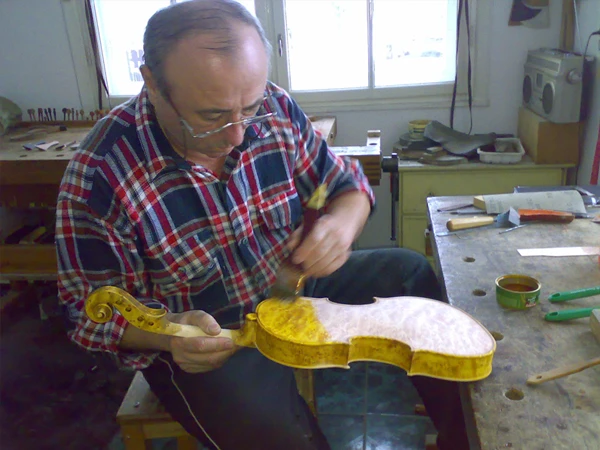
A master violin is not chosen from a photograph, and not on price alone. It is an investment that lasts for decades, and it comes down to the wood chosen, to the hand that worked it, to the sound that comes out of it. Here is what is worth looking at before you decide.
1. The woods and how long they were seasoned
The top of the violin is made from resonance spruce, the back, neck and ribs from flamed maple, and the fittings from ebony. That is all. But the species alone does not tell the whole story — just as important is how long the wood was left to dry before being worked. Wood naturally seasoned for at least 15 years behaves differently from wood that was “hurried”: it is more stable, it resonates more cleanly and it ages beautifully along with the instrument. Always ask about the age of the wood, not only about the species.
2. The varnish — oil or nitro?
Varnish is not just a protective layer, it is part of the sound. Oil varnish, applied by hand in successive coats and antiqued in the traditional way, lets the wood breathe and gains, over time, a depth that fast synthetic varnishes never reach. A nitro varnish dries quickly and keeps costs down, but it sacrifices some of the quality of the vibration.
3. The model of the instrument
The great historical models — Stradivari, Guarneri del Gesù, Amati — are not just names on a label, but archetypes of proportion and thickness that directly shape the timbre: a Stradivari model tends towards a round, balanced sound, a Guarneri towards a stronger, darker one. The choice of model should start from the kind of sound you are looking for, not the other way round.
4. The sound, heard live
No description takes the place of hearing the instrument. Ask to listen to it played, not just plucked — ideally in the hall or space where it will actually be used. A good instrument sounds clear and full across the whole register, without “dead” notes or unwanted noises.
5. The certificate of authenticity
Any master instrument worth the name is supplied with written documentation and colour photographs attesting who built it, in what year and from which materials. The certificate matters twice over: at resale, but also in dealings with an insurer, if you want to protect the investment.
6. The setup
A perfectly built instrument can sound mediocre if it is badly set up. The bridge, the soundpost (the small internal column that transmits the vibration) and the strings all need fine adjustment, done by ear, for the instrument and the player who will use it. Ask whether the final setup is included and who carries it out.
7. The relationship with the luthier
Finally, a master instrument is not bought just once — the relationship with the workshop continues after the sale, through periodic adjustments, small repairs or advice on care. An approachable luthier, one who answers questions and knows the history of every instrument that has left his hands, is worth as much as the wood and the varnish.
Taken together, a master instrument is the sum of all these decisions — usually made years before you hold it for the first time.